Poughkeepsie Locksmith Service Team
Local locksmith team
May 28, 2026 9 min read
Closing day on a Hudson Valley home is one of the best feelings there is — whether you've landed a Victorian on the north side of Poughkeepsie, a ranch near the Taconic State Parkway, or a Colonial close to the Walkway Over the Hudson. But once the champagne is gone and the moving boxes arrive, there's a security question every new homeowner should answer before the first night: who else has a key to your front door? The previous owners handed you their set, but what about the real estate agent's copies, the contractor who did pre-sale repairs, or the neighbor who held a spare for the last decade? You have no way of knowing, and that uncertainty is exactly why rekeying or replacing your locks is the first smart move you make as a new homeowner.
The good news is that this doesn't have to be complicated. A professional locksmith can assess your existing hardware in minutes and walk you through the options honestly. The real question is whether rekeying what you already have is the right call — or whether this is the moment to upgrade to something stronger. Here's how to think through it.
## What Rekeying Actually Does (and When It's the Right Move)
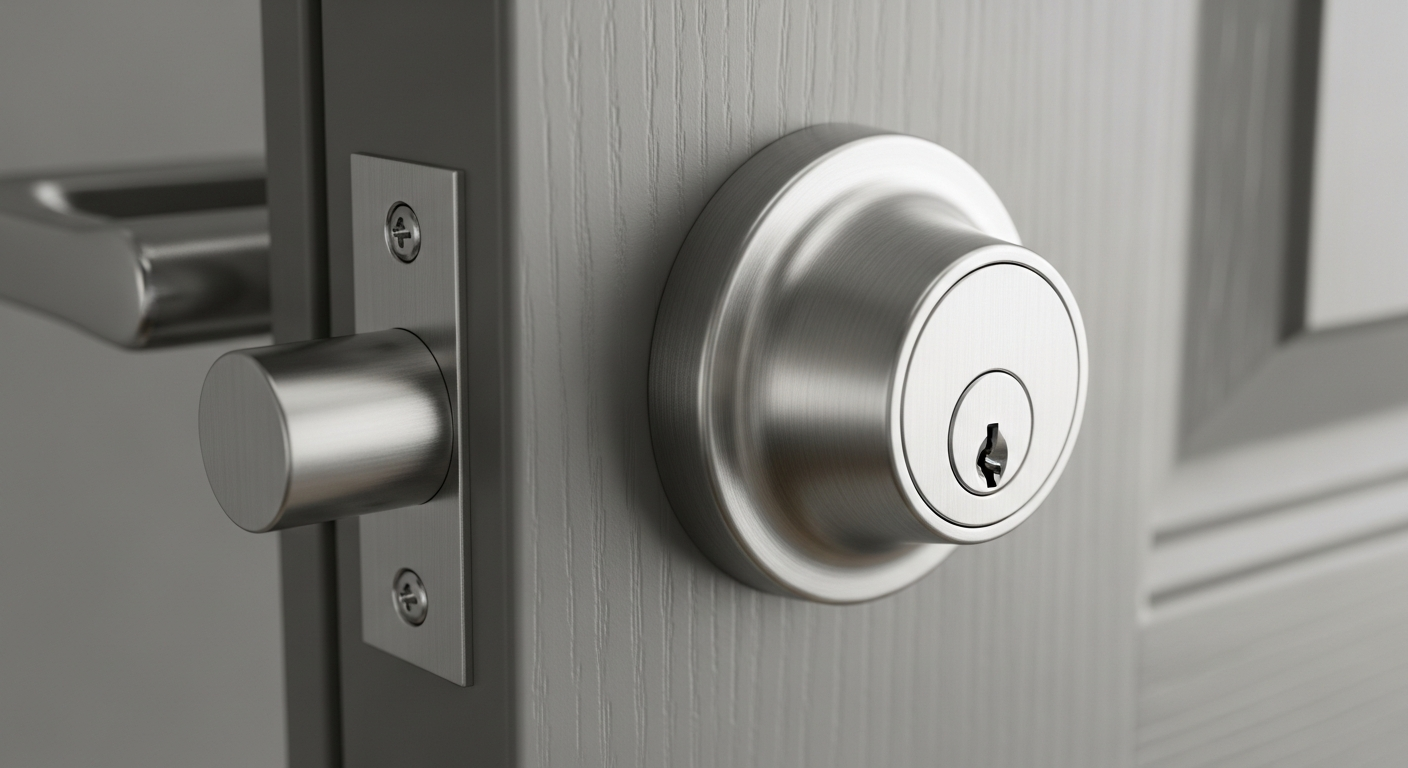
Rekeying a lock doesn't touch the hardware — it changes the internal pin configuration inside the cylinder so that all previous keys stop working and only your new key operates it. For a locksmith, it's a precise mechanical process: the cylinder is removed, the driver pins and key pins are rearranged to match a new cut pattern, and the lock is reinstalled. It's faster than a full replacement and makes sense when your existing locks are in solid working condition, are good-quality hardware to begin with, and you simply need to eliminate access for anyone who held a key before you owned the home.
This is the most common recommendation for new homeowners whose locks show no signs of wear, damage, or tampering. If your Poughkeepsie home came with functioning deadbolts that turn smoothly and latch securely, rekeying is a practical first step. One note: if you have multiple entry points — front door, back door, side garage entry — a locksmith can often rekey all cylinders to the same key, which homeowners find far more convenient than juggling three different keys for one house.
## When Full Lock Replacement Makes More Sense
There are scenarios where rekeying isn't enough — or simply isn't worth it. If the existing locks are builder-grade hardware that came standard with the home, they may offer minimal resistance to a determined intruder. Budget knob-only locks without a deadbolt, locks with visibly worn keyways, or any lock where the door knob is stuck in the lock position or feels loose and unreliable should be replaced outright rather than rekeyed. Worn internal components don't improve with rekeying. If a lock isn't functioning smoothly now, it won't after a rekey either.
Replacement also makes sense when you want to upgrade your security grade. Grade 1 deadbolts — the highest residential rating — offer significantly stronger resistance than the Grade 3 hardware often installed during construction. Brands like Schlage and Kwikset both offer solid Grade 1 options in a range of finishes that match older Hudson Valley homes. If your home has a sliding glass door, be aware that standard latches on those doors offer very little security; a sliding glass door replacement mortise lock is a meaningful upgrade worth discussing with your locksmith. Some homeowners also learn during the insurance process that their policy's best rate tier requires a home insurance 5 lever lock on entry doors — your locksmith can confirm whether your current hardware qualifies or what needs to change.
## Assessing Every Entry Point, Not Just the Front Door
A house isn't secured by its front door alone. New homeowners are often focused on the main entry and overlook the side door from the garage, the basement walkout, the back sliding door, or even the door between an attached garage and the interior living space — which is frequently the least-secured door in any home. Before any work begins, a trained locksmith should walk the full perimeter with you and identify every point of entry that needs attention. This takes maybe fifteen minutes and gives you a complete picture rather than a piecemeal one.
In the Poughkeepsie area, homes near the waterfront on the south side of the city or in the older neighborhoods close to Main Street often have non-standard door frames from decades of renovations — meaning off-the-shelf hardware doesn't always drop straight in. An experienced locksmith will measure the door prep, check the strike plate alignment, and confirm the right hardware fits properly before ordering or installing anything. That kind of site-specific assessment is exactly what separates a real security upgrade from a cosmetic one. If you're already thinking through your options, call (845) 572-1284 — our team is available around the clock and can schedule an assessment at your convenience.
## Smart Lock Upgrades and Additional Security Layers
Many new homeowners use this moment — when the locks are already being addressed — to consider whether a smart lock makes sense for their household. Smart deadbolts allow keypad codes, app-based access, and the ability to grant or revoke access remotely, which is useful if you have regular housekeepers, dog walkers, or family members coming and going. They install over the same door prep as a standard deadbolt in most cases, and a skilled locksmith can complete the installation and walk you through the setup. Brands like Schlage Encode and Kwikset Halo have strong track records for reliability in real residential use.
Beyond the locks themselves, a few supporting upgrades are worth considering while you're in project mode. Reinforced strike plates — the metal plate the bolt slides into — secured with three-inch screws that reach the door stud rather than just the trim are one of the highest-value security improvements available. Door reinforcement kits for weak jambs are another. None of these are complicated installs, but doing them at the same time as a lock replacement means the job is complete rather than done in stages. Ask your locksmith to assess the strike plate condition on every door they're working on.
## Understanding Pricing, Timing, and What to Expect
When homeowners ask what rekeying or replacement costs, the honest answer is that the final price depends on several specific factors: the number of locks being serviced, the type and grade of hardware being installed (if replacement is needed), the time of day the work is scheduled, and travel distance to your address. Any reputable locksmith will confirm an exact price before a single screw is turned — there should be no surprises on the invoice. When you call (845) 572-1284, we'll ask about your locks, your location, and what you're trying to accomplish, and we'll give you a straightforward quote before we arrive.
On timing: most homeowners want this handled before they move in or within the first few days of possession. That's the ideal window. But life happens — if you're already settled in and haven't gotten around to it, or if you've just realized you're missing a key and your door knob is stuck in the lock position after a rough move-in week, those are equally good reasons to call. We operate 24 hours a day, 7 days a week across the Poughkeepsie area, so whether it's a planned afternoon appointment or an unexpected late-night issue, you're not waiting until business hours. Our mobile team comes to you — no need to remove hardware and bring it anywhere.
Frequently asked questions
Is rekeying as secure as installing a brand-new lock?+
If the existing lock is in good mechanical condition and is a quality grade to begin with, rekeying provides the same security as a new lock with a fresh key — because the only thing that changed is which key operates it. The vulnerability rekeying addresses is unauthorized key copies, not the physical strength of the hardware. If the hardware itself is worn, low-grade, or damaged, replacement is the better choice. A trained locksmith can tell you which situation you're dealing with after a quick look at the lock.
How many keys can I get when I rekey or replace my locks?+
As many as you practically need. When a locksmith rekeys or installs a lock, additional keys can be cut from the new cylinder on the spot. Most households want at least three to four copies — primary residents, a trusted backup location, and perhaps a family member nearby. If you're also rekeying multiple doors to the same key, all of those cuts will match. Just let your locksmith know how many copies you need before the job begins.
What should I do if I'm locked out of my new home before the locks are changed?+
First, check every possible entry point — windows you may have left unlocked, an attached garage door, or a back entry. Check whether any of the previous owners' keys were left with a neighbor or real estate contact who can be reached quickly. Do not attempt to force or pick the lock yourself, as this can damage the hardware and potentially create a security or liability issue. If you're genuinely locked out, call a professional locksmith — we can verify ownership on-site and get you in without damaging the door or frame. Once you're inside, that's also the perfect time to have the locks rekeyed or replaced so the situation can't repeat.
Can a locksmith rekey all my doors to one key?+
Yes — this is called a master key or keyed-alike setup, and it's one of the most practical things a locksmith can do for a new homeowner. Rather than carrying a different key for the front door, back door, and side entry, all cylinders are rekeyed to respond to a single key cut. This works as long as the locks are compatible with a common keyway. A locksmith will confirm compatibility during the assessment. It's a simple request that makes daily life noticeably easier.